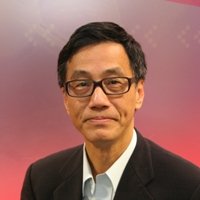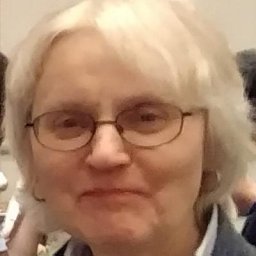
Teaches COMS W4156 Advanced Software Engineering and COMS E6156 Topics in Software Engineering. Advises multiple doctoral students, including Yangruibo (Robin) Ding (co-advised with Baishakhi Ray) and Ira Ceka (co-advised with Baishakhi).
Research Experience
In the 1980s and early 1990s, Prof. Kaiser investigated semantics-focused extensions to language-based editors and process-oriented team software development environments, which were forerunners to today's IDEs and Continuous Integration. In the mid-1990s through the early 2000s, she explored collaborative work technologies leveraging the nascent World Wide Web and self-adaptation for emerging cloud computing, particularly techniques for retrofitting legacy software. Starting with her sabbatical at Columbia's Center for Computational Learning Systems in 2005-2006, she was among the first to investigate software engineering testing techniques, such as metamorphic testing, for finding bugs in machine learning software. Her recent work ranges across static and dynamic program analysis techniques for both source code and binaries. Currently, she investigates secure computing paradigms and machine learning techniques for solving software engineering problems.
Education
PhD from CMU and BS from MIT.
Background
Interests include static and dynamic program analysis, software testing, software security, software systems, AI for software engineering (AI4SE), and software engineering for AI (SE4AI). She conducts research in software engineering and security from a systems perspective, focusing on program analysis and software testing.