Scholar
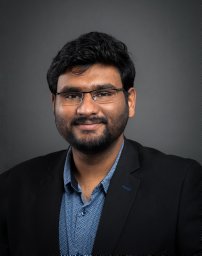
Ashwin Kumar
Google Scholar ID: HZ2INsEAAAAJ
Washington University in St Louis
Citations & Impact
Citations
91
H-index
4
i10-index
3
Publications
18
Co-authors
17
list available
Publications
Resume (English only)
Academic Achievements
- Paper 'Detecting Prefix Bias in LLM-based Reward Models' accepted at ACM FAccT 2025
- Paper 'Dialectical reconciliation via structured argumentative dialogues' published at KR 2024
- Workshop paper 'DECAF: Learning to be Fair in Multi-Agent Resource Allocation' accepted at RL Safety Workshop @ RLC 2024
- Paper 'Using Simple Incentives to Improve Two-Sided Fairness in Ridesharing Systems' published at ICAPS 2023
- Extended abstract 'Remember, but also, Forget: Bridging Myopic and Perfect Recall Fairness with Past-Discounting' accepted at AAMAS 2025 Workshop on Autonomous Agents for Social Good (AASG)
Research Experience
- Works on temporal resource allocation problems involving interactions between resources and agents over time
- Early work used simple incentives to improve two-sided fairness in ridesharing systems
- Recently developed the DECAF framework to learn fair allocation policies in multi-agent settings using reinforcement learning
- Investigates methods to bridge myopic and long-term fairness considerations
- Collaborates with Stylianos Vasileiou on Human-Aware AI to improve human understanding of and interaction with AI systems
- Developed a dialectical reconciliation framework using structured argumentative dialogues to resolve knowledge discrepancies between users and AI agents
Miscellany
- Enjoys reading books and biking in Forest Park when not working
- Likes playing the piano whenever possible
- Passionate about traveling and has visited many places around the world
- Always open to recommendations for new activities, books, and music
- Designed this personal website using an agentic LLM; believes the next major advances will come from agentic systems and reinforcement learning