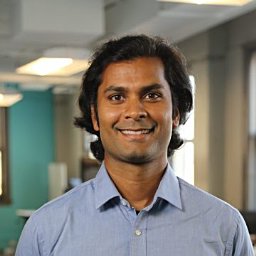
Scholar
Mohit Tiwari
Google Scholar ID: FukOricAAAAJ
Associate Professor, UT Austin
Citations & Impact
Citations
2,043
H-index
26
i10-index
38
Publications
20
Co-authors
10
list available
Contact
No contact links provided.
Publications
Resume (English only)
Academic Achievements
- Qualcomm Faculty Award, 2018
- Finalist, CSAW18 Applied Research Competition, 2018
- Best Paper Award nominee, International Conference on Hardware-Oriented Security and Trust (HOST), 2018
- Qualcomm Faculty Award, 2017
- AMD Chair, Department of ECE, UT Austin, 2017–18
- Best Paper Award, ASPLOS 2015
- NSF CAREER Award, January 2015
- IEEE Micro Top Pick Honorable Mention, Jan–Feb 2015
- Google Faculty Research Award, 2013–14
- Top 10 shortlist, NYU-Poly Best Applied Security Paper Award, 2013
- Computing Innovation Fellow with Prof. Krste Asanovic and Dawn Song, UC Berkeley, 2011–13
- Outstanding Dissertation Award, Department of Computer Science, UC Santa Barbara, 2011
- IEEE Micro Top Pick from Computer Architecture Conferences, Jan–Feb 2010
- Best Paper Award, Parallel Architecture and Compiler Techniques (PACT), September 2009
- Outstanding Teaching Assistant, Department of Computer Science, UC Santa Barbara, Winter 2006
Background
- Associate Professor in the Department of Electrical and Computer Engineering (ECE) at the University of Texas at Austin
- Conducts research in computer architecture and system security at the Spark Lab
- Current research aims to build a system stack where users retain control over their data even when using untrusted applications on untrusted datacenters
- The work is based on a new secure processor that enables software to defend itself via hardware and obfuscates all digital signals emanating from the CPU
- This hardware enables software-defined containers resilient to various threat models
- Proposes data-centric containers instead of service-centric ones, significantly reducing the trusted computing base while allowing developers to use security-agnostic design patterns for privacy-preserving web applications
- Graduate research focused on building verifiably information-flow secure embedded systems