Scholar
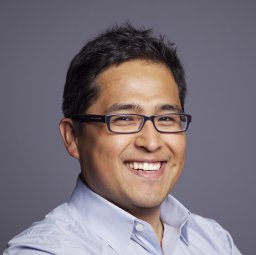
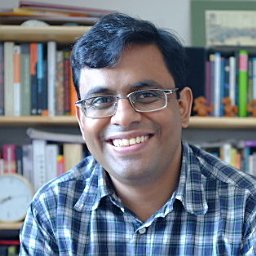
Benjamin Mako Hill
Google Scholar ID: FT2sH3gAAAAJ
Associate Professor, University of Washington
Citations & Impact
Citations
2,319
H-index
25
i10-index
53
Publications
20
Co-authors
48
list available
Contact
Publications
Resume (English only)
Academic Achievements
- 2024: With Kaylea Champion, “Sources of Underproduction in Open Source Software,” IEEE SANER.
- 2024: With Kaylea Champion, “Countering Underproduction of Peer Produced Goods,” New Media & Society.
- 2024: With Zarine Kharazian and Kate Starbird, “Governance Capture in a Self-Governing Community,” Proceedings of the ACM on Human-Computer Interaction.
- 2023: With Kaylea Champion, “Taboo and Collaborative Knowledge Production: Evidence from Wikipedia,” Proceedings of the ACM on Human-Computer Interaction.
- 2023: With Jeremy Foote and Aaron Shaw, “Communication Networks Do Not Predict Success in Attempts at Peer Production,” Journal of Computer-Mediated Communication.
- 2022: With Ruijia Cheng, “Many Destinations, Many Pathways: A Quantitative Analysis of Legitimate Peripheral Participation in Scratch,” Proceedings of the ACM on Human-Computer Interaction.
- 2022: With Emilia F. Gan and Tyler Menezes, “How Gender, Ethnicity, and Public Presentation Shape Coding Perseverance…”
Research Experience
- Associate Professor in the Department of Communication, University of Washington.
- Adjunct Associate Professor in Human-Centered Design & Engineering, Paul G. Allen School of Computer Science & Engineering, and the Information School at UW.
- Co-founder (with Aaron Shaw) of the Community Data Science Collective.
- Affiliate Faculty at UW’s Center for Statistics and the Social Sciences, eScience Institute, and the 'Design Use Build' (DUB) HCI research group.
- Faculty Associate at Harvard University’s Berkman Klein Center for Internet and Society.
- Affiliate of Harvard’s Institute for Quantitative Social Science.
- Fellow at Princeton University’s Center for Information Technology Policy (CITP) during the 2023–2024 academic year.