Scholar
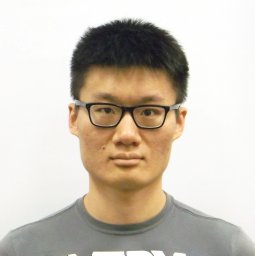
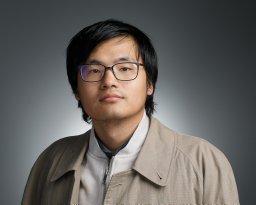
Guojun Xiong
Google Scholar ID: FIBwLnoAAAAJ
Harvard University, Department of Computer Science
Citations & Impact
Citations
590
H-index
12
i10-index
13
Publications
20
Co-authors
7
list available
Contact
Publications
Resume (English only)
Academic Achievements
- 2025: Granted a USPTO patent on 'Next-generation Smart Agriculture Networks'.
- 2025: Paper accepted as Spotlight at NeurIPS 2025; additional papers accepted at ACL 2025, ACM SIGMETRICS 2025 Workshop, ICLR 2025 Workshop, IEEE ICC 2025, AAMAS 2025, AAAI 2025 (including Innovative Applications track), etc.
- 2024: Two papers accepted at NeurIPS 2024 (acceptance rate: 25.8%); one at AAAI 2025 (23.4%); one at AAMAS 2025 (24.5%); publications in IEEE Transactions on Wireless Communications, IEEE/ACM Transactions on Networking, AIoT 2024, RLC 2024 Workshop, etc.
- 2024: Selected as Top Reviewer (top 8%) at NeurIPS 2024.
- 2024: Awarded travel grant by Meta for the 1st RL Conference; received Excellence in Research Award from the Data Science Program at Stony Brook University.
- Serving as PC member for multiple top-tier conferences: KDD 2025, IJCAI 2025, ICML 2025, AISTATS 2025, ICLR 2025, COLING 2025, AAAI 2024, etc.
- 2025: Delivered invited plenary talk at NSF AI Institute for Societal Decision Making; invited talk at SIAM Conference on Financial Mathematics & Engineering (FM25).
Background
- Postdoctoral fellow in the Department of Computer Science at Harvard University, affiliated with Teamcore, hosted by Prof. Milind Tambe.
- Motivated by complex, resource-constrained sequential decision-making problems under uncertainty.
- Research objective is to advance reinforcement learning (RL) through innovative structured RL frameworks that leverage inherent problem structures to improve sample efficiency and accelerate learning.
- Focuses on addressing key challenges in both model-based and model-free RL, especially in environments with multiple coupled Markov Decision Processes (MDPs).
- Aims to develop RL algorithms with provably sub-linear regret guarantees.
- Seeks real-world impact and scalability of structured RL in applications such as edge/cloud computing, cloud caching, wireless video streaming, and healthcare.
- Primary research interests include: online sequential decision-making under uncertainty, stochastic optimization and control, finite-time convergence and regret analysis for RL, decentralized optimization, multi-agent RL for networked decision-intelligent systems, and broader societal impacts in public health and social good.