Scholar
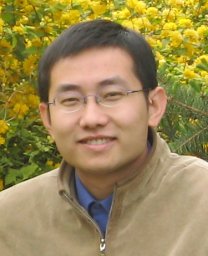
Xiaodong Li, IEEE Fellow
Google Scholar ID: AQewL04AAAAJ
Professor, School of Computing Technologies, RMIT University, Melbourne
Citations & Impact
Citations
9,259
H-index
48
i10-index
124
Publications
20
Co-authors
60
list available
Publications
Browse publications on Google Scholar (top-right) ↗
Resume (English only)
Academic Achievements
- Recipient of the 2013 ACM SIGEVO Impact Award
- 2017 IEEE CIS Outstanding Paper Award for IEEE Transactions on Evolutionary Computation
- Winner of the IEEE CEC 2019 Large-Scale Global Optimization (LSGO) competition with the RDG3 algorithm
- Elected IEEE Fellow in 2020 'for contributions to large-scale and particle swarm optimization'
- Google Scholar h-index: 65
- Secured multiple competitive national research grants:
- - ARC Discovery Grant (DP250103251): 'Learning to Value Constraints', AUD $563K (2025–2027)
- - ARC Industrial Transformation Research Hubs (IH240100009): Intelligent Energy Efficiency in Future Protected Cropping, AUD $5M (2024–2029)
- - ARC Linkage Grant (LP230100439): 'Explainable machine learning for electrification of everything', AUD $512K (2024–2026)
- - CSIRO Next Generation AI Program 2022: 'All System analysis – analytics and intelligent automation', AUD $1,073K (2022–2025)
Background
- Professor in Artificial Intelligence, School of Computing Technologies, RMIT University, Melbourne, Australia
- Assistant Associate Dean of the Data Science and Artificial Intelligence (DSAI) discipline
- IEEE Fellow (since 2020)
- IEEE CIS Distinguished Lecturer (2024–2026)
- Member of the Australian Research Council (ARC) College of Experts (2023–2026)
- Leader of the ECML (Evolutionary Computation and Machine Learning) research group
- Research interests include: machine learning, evolutionary computation, multiobjective optimization, multimodal optimization (niching), swarm intelligence, data mining/analytics, deep learning, journey planning, math-heuristic methods for optimization, large language models, explainable AI, reinforcement learning, game theory, etc.