Scholar
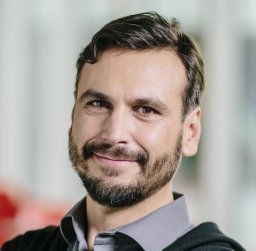
Massimiliano Di Luca
Google Scholar ID: 93hi3QcAAAAJ
University of Birmingham, School of Psychology/School of Computer Science
Citations & Impact
Citations
2,015
H-index
24
i10-index
50
Publications
20
Co-authors
113
list available
Publications
Resume (English only)
Academic Achievements
- Turing Fellow, The Alan Turing Institute (Oct 2021–Sep 2023)
- Fellow, InterContinental Academia (UBIAS) on Intelligence and Artificial Intelligence (Sep 2021–Aug 2023)
- Principal Investigator on multiple grants, including:
- - EPSRC-funded ARME project (Sep 2021–Aug 2024, £1.3M, with Alan Wing, Maria Witek, Ryan Stables)
- - UKRI iCURE awards (2024–2025) supporting spin-out and pre-accelerator activities for ARME
- - Google Academic Gifts (2024–2027) for research on immersive environments and text entry
- - EPSRC and BBSRC Impact Acceleration Awards (2023–2024) for app development, museum exhibitions, and latency studies
Research Experience
- July 2018–Present: Senior Lecturer/Associate Professor at University of Birmingham – research, mentoring students, teaching MSc modules (e.g., 'Mind, Brain and Models'), Business Engagement Champion, Chair of Health and Safety Committee
- July 2017–September 2019: Research Scientist at Facebook Reality Labs
- July 2015–December 2016: Research Scientist at Oculus via PRO Unlimited
- August 2011–July 2018: Lecturer at University of Birmingham – research, teaching, led the MSc in Computational Neuroscience and Cognitive Robotics
- August 2006–July 2011: Scientist at Max Planck Institute for Biological Cybernetics – conducted research on haptics, AR/VR, multisensory and temporal perception, and computational modeling in the groups of Marc Ernst and Heinrich Bülthoff; coordinated European grants
Background
- Associate Professor at the University of Birmingham, jointly appointed in the School of Psychology and the School of Computer Science
- Conducts fundamental and applied research on human multisensory perception, with emphasis on its temporal, dynamic, and interactive nature
- Uses psychophysical experiments, computational modeling, and immersive technologies to understand how the brain integrates sensory inputs with assumptions, predictions, and active exploration
- Applies signal processing and machine learning to uncover patterns linking user movement and perception
- Aims to develop quantitative, testable computational models of cognitive and neural processes for applications in robotics, haptic rendering, and perceptual optimization in VR systems