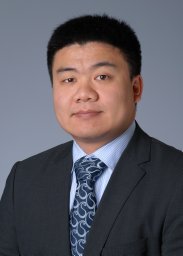
Scholar
Chi Zhang
Google Scholar ID: 8r9Eb_sAAAAJ
Oregon Health & Science University
Citations & Impact
Citations
4,820
H-index
36
i10-index
85
Publications
20
Co-authors
0
Contact
No contact links provided.
Publications
Browse publications on Google Scholar (top-right) ↗
Resume (English only)
Academic Achievements
- Sha Cao awarded the NIGMS R35 grant to develop a systems biology framework for dissecting crosstalk among cellular components in disease tissue microenvironments (Oct 2024)
- Sha Cao awarded the American Cancer Society Research Scholar Grant supporting her research on breast and pancreatic cancer (Oct 2024)
- Chi Zhang awarded an R01 grant using AI-empowered wearable multimodal sensors for noninvasive monitoring of Parkinson’s disease (Sep 2024)
- Sha Cao presented a poster titled “Computational methods to study metabolic variations in PDAC” at the AACR Pancreatic Cancer Meeting 2024 in Boston (Sep 2024)
- Collaborative work with Dr. Xinna Zhang’s group, “Inhibition of Glutamate-to-Glutathione Flux Promotes Tumor Antigen Presentation in Colorectal Cancer Cells,” accepted by Advanced Science (Sep 2024)
- Collaborative paper “A highly reproducible and efficient method for retinal organoid differentiation from human pluripotent stem cells” accepted by PNAS (May 2024)
- Jia Wang received a $10k IUSCCC Training Grant for “Computational Modeling of MHC-I antigen presentation flow in cancer cells” (May 2024)
- Chi Zhang invited by NIH Innovation Lab to participate in a five-day closed-door expert workshop on quantum computing applications in biomedical research (Oct 2024)
- Sha Cao gave talks on “Integrating multi-omics data for sparse latent space detection” at ICSA China (Wuhan) and ISGTM (Xi’an) in June 2024
Background
- Research interests include understanding mathematical representations of biological processes, relations, and functions in omics data and developing underlying analysis principles and mathematical theories
- Developing new systems biology models and AI frameworks to maximize understanding of biological mechanisms in omics and multi-omics data
- Representation learning of high-dimensional data, with a focus on linear/non-linear low-rank and local low-rank representation of matrices and high-order tensors
- Understanding biochemical variations in the microenvironment of cancer and inflammatory diseases
- Developing explainable graphical/network models for biomedical data and transfer learning
- Studying single-cell and spatial multi-omics data to infer sample-wise/spatial-dependent activity of transcriptional regulation, metabolism, and signaling pathways
- Biomarker prediction and development of personal wearable sensors and other smart health-related AI and biotechnologies
- Natural language processing-based mining of biological literature data
- Nutrient and food recommendations
Co-authors