Scholar
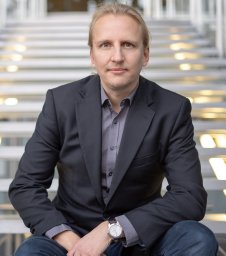
Michael Kamp
Google Scholar ID: 8R5jbvQAAAAJ
Associate Professor, TU Dortmund; Lamarr Institute; Institute for AI in Medicine
Citations & Impact
Citations
2,054
H-index
13
i10-index
20
Publications
20
Co-authors
87
list available
Publications
Resume (English only)
Academic Achievements
- Published paper 'Flatness is Necessary, Neural Collapse is Not: Rethinking Generalization via Grokking' at NeurIPS 2025 (A*, top 7%)
- Two papers accepted at AAAI 2025 (A*, top 7%): 'Little is Enough: Boosting Privacy by Sharing Only Hard Labels in Federated Semi-Supervised Learning' and 'Federated Binary Matrix Factorization using Proximal Optimization'
- Published 'Layer-wise Linear Mode Connectivity' at ICLR 2024 (A*, top 7%)
- Published 'Orthogonal Gradient Boosting for Simpler Additive Rule Ensembles' at AISTATS 2024 (A, top 16%)
- Organizing the Workshop on Federated Learning in Critical Applications at AAAI 2026 in Singapore
Research Experience
- Designs algorithms for federated and decentralized learning that reduce communication overhead, handle non-IID or small datasets, and preserve privacy while maintaining high performance
- Investigates mathematical foundations of deep learning, including loss surface geometry, generalization theory, flatness, and their links to robustness and adversarial behavior
- Explores causal structure discovery and utilization to improve performance, explainability, and reliability
- Pioneered privacy-preserving causal discovery methods in federated settings
- Collaborates closely with partners in medicine, industry, and government to translate theoretical advances into real-world impact
Background
- Associate Professor for Machine Learning and Artificial Intelligence at TU Dortmund University
- Faculty member of the Lamarr Institute for Machine Learning and Artificial Intelligence
- Affiliated with the Institute for Artificial Intelligence in Medicine (IKIM) at University Medicine Essen, continuing collaborations in medical AI research
- Offers Bachelor’s and Master’s thesis topics for students of the UA Ruhr alliance (University of Duisburg-Essen, Ruhr-University Bochum, TU Dortmund)
- Research focuses on trustworthy and theoretically grounded machine learning methods, especially in distributed, privacy-critical, and high-stakes settings such as healthcare
- Core interests include deep learning theory, causal representation learning, and federated learning, and their integration for reliable AI systems