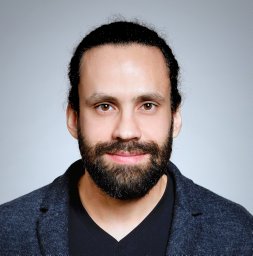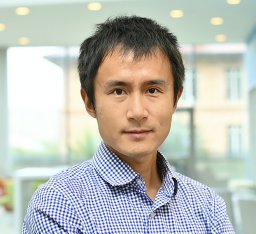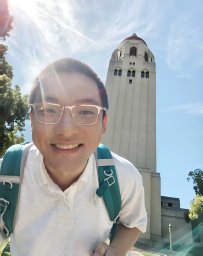
First-year PhD student in the Cognition and Neural Systems Program at the University of Arizona, advised by Robert Wilson.
Prior to PhD, worked with Xue-Xin Wei at UT Austin.
Earlier collaborated with Da-Hui Wang at Beijing Normal University.
Previously used EEG to study working memory.
Studied counseling psychology with a focus on cognitive behavioral therapy during undergraduate studies.
Background
Studies computational neuroscience.
Interested in understanding large language models (LLMs) beyond mechanistic details, exploring how LLMs can enhance collective decision-making and inform policy, aligning LLMs with human priors and ultimate good values, and using mechanistic insights from LLMs and neural network theory to expand the space of cognitive hypotheses.
Uses models to understand behaviors of both biological and artificial agents and explores how computation could be implemented in neural networks.
Since the release of GPT-4, research focus has partially shifted toward understanding the emergence of intelligence in large language models.
Current research interests include: using recurrent neural networks as cognitive models to identify hidden variables in cross-species decision-making; examining how prior information is encoded in working memory via optimization-based neural network models; and investigating how humans use language as a tool for control and agency through dialogue.
Miscellany
Addicted to exploring complex ideas and writes controversial thoughts on his blog.
Enjoyed reading as a youth; favorite authors include James Joyce, Milan Kundera, Jorge Borges, Franz Kafka, Dostoyevsky, and Edgar Allan Poe.
Lost patience for long books after high school.
Addicted to computer games, but only when exams are approaching—now rarely plays due to few exams.
Enjoys skiing, dark humor, and embarrassing short videos.
Finds using a second language painful, especially because he struggles to express sarcasm well in English.
Bad at arithmetic—even messes up single-digit calculations with pen and paper, which makes him doubt his suitability as a computational neuroscientist (though notes that LLMs also fail at simple math).