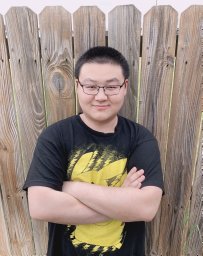
Scholar
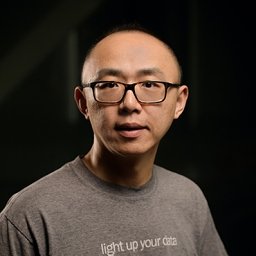
Junyuan (Jason) Hong
Google Scholar ID: 7Cbv6doAAAAJ
University of Texas at Austin
Citations & Impact
Citations
2,003
H-index
17
i10-index
28
Publications
20
Co-authors
20
list available
Publications
Browse publications on Google Scholar (top-right) ↗
Resume (English only)
Academic Achievements
- Selected as MLSys Rising Star in 2024
- Best Paper Nomination at VLDB 2024 for LLM-PBE benchmark
- DP-OPT paper at ICLR 2024 received Spotlight recognition
- Three papers accepted to COLM 2025 (on robust safety, reasoning, alignment); one on medical hallucination accepted to EMNLP 2025
- Work featured by Nature News, The White House, WIRED, Forbes, and FORTUNE
- Projects funded by OpenAI Researcher Access Program and NAIRR Pilot Program
- Team ILLIDAN Lab won 3rd place in U.S. PETs Prize Challenge
- Serving as Area Chair for NeurIPS 2025; co-organizing GenAI4Health@NeurIPS and FedKDD workshops
- Co-organized GenAI4Health workshop and LLM and Agent Safety Competition at NeurIPS 2024
Research Experience
- Postdoctoral fellow at the Institute for Foundations of Machine Learning (IFML), UT Austin, advised by Dr. Atlas Wang
- Affiliated with UT AI Health Lab and the Good System Challenge
- Will work at Massachusetts General Hospital & Harvard Medical School from July 2025 to June 2026
- Will join NUS ECE as a tenure-track Assistant Professor in July 2026
- Leading the CoSTA@NUS Lab (Cognitive Science & Trustworthy AI Lab)
Background
- Incoming Assistant Professor at the Department of Electrical and Computer Engineering (ECE), National University of Singapore (NUS)
- Research focuses on trustworthy AI at the intersection of cognitive science, AI safety, and health applications
- Aims to understand AI systems’ inner mechanisms and vulnerabilities through cognitive psychology and neuroscience
- Applies AI to cognitive health, including dementia diagnosis/intervention for older adults and AI-driven digital twins of patients
- Develops foundational computational methods for AI safety, including privacy attacks/defenses, risk quantification, and constitutional AI agents