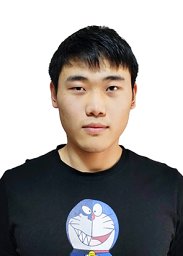
Scholar
Tonghua Su
Google Scholar ID: 67fxVzoAAAAJ
Professor of Harbin Institute of Technology
Citations & Impact
Citations
411
H-index
11
i10-index
13
Publications
20
Co-authors
17
list available
Contact
Publications
Resume (English only)
Academic Achievements
- Published 15 books or translations and over 80 papers. Pioneered the basic framework for handwritten Chinese text recognition and collected the first handwritten Chinese database (HIT-MW Database), which has been adopted by more than 200 research institutes worldwide. His research group won two world championships in handwriting recognition competitions at the International Conference on Document Analysis and Recognition. He has been recognized as a national best GPU education center for four consecutive years. Appointed as an Ascend Leader, member of the MindSpore Technical Governance Committee, and Huawei Ascend Expert (HAE).
Research Experience
- Main research directions include pattern recognition and deep learning, GPU computing, and service computing, focusing on next-generation AI scientific problems. Based on core technologies such as deep learning and heterogeneous computing, he focuses on cutting-edge research and applications in multimodal media generation and security, large model computing architecture, and service optimization.
Education
- Graduated from the School of Computer Science and Technology at Harbin Institute of Technology in 2008 with a Ph.D. in Engineering; then entered the State Key Laboratory of Pattern Recognition at the Chinese Academy of Sciences for postdoctoral research.
Background
- Professor, Doctoral Supervisor, and Deputy Dean of the School of Software at Harbin Institute of Technology. Research interests include artificial intelligence, deep learning, GPU computing, and embodied intelligence.
Miscellany
- Focuses on the foundational technology and industrial application of AI, developing large-scale deep learning training and prediction platforms, with applications in intelligent exam grading and mobile handwriting input methods.