Scholar
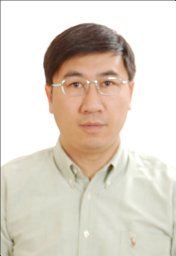
Shilong Bao(包世龙)
Google Scholar ID: 5ZCgkQkAAAAJ
University of Chinese Academy of Sciences (UCAS)
Citations & Impact
Citations
363
H-index
11
i10-index
12
Publications
20
Co-authors
10
list available
Publications
Browse publications on Google Scholar (top-right) ↗
Resume (English only)
Academic Achievements
- Ph.D. thesis “Toward Efficient and Generalizable Collaborative Metric Learning Algorithms” selected as a Distinguished Dissertation Award of Chinese Academy of Sciences (2025).
- Multiple papers accepted by top-tier venues: NeurIPS 2025, ICML 2025, T-PAMI (2023–2025), ICCV 2025 Workshop, etc.
- First-place awards in international competitions:
- - ICCV 2025 Competition for High-Quality Face Dataset Generation (DataCV Challenge)
- - CVPR 2025 Workshop on Compositional 3D Vision (C3DV 3DCoMPaT-200)
- - CVPR 2025 Competition for Fine-grained Video Understanding (EgoVis HoloAssist Challenges)
- Nominated as ICLR Notable Reviewer 2025.
- Key publications include:
- - “Towards Size-invariant Salient Object Detection” (T-PAMI 2025)
- - “AUCPro: AUC-Oriented Provable Robustness Learning” (T-PAMI 2025)
- - “Improved Diversity-Promoting Collaborative Metric Learning for Recommendation” (T-PAMI 2024)
- - “Rethinking Collaborative Metric Learning” (T-PAMI 2023)
- - “The Minority Matters” (NeurIPS 2022 Oral)
Research Experience
- Post-doc Fellow, School of Computer Science and Technology, UCAS.
- Has collaborated with:
- - Qianqian Xu (Professor, Institute of Computing Technology, CAS)
- - Xiaochun Cao (Dean, School of Cyber Science and Technology, Sun Yat-sen University)
- - Zhiyong Yang (Tenure-track Assistant Professor, UCAS)
Background
- Currently a Post-doc Fellow at the School of Computer Science and Technology, University of Chinese Academy of Sciences (UCAS).
- Research interests primarily lie in machine learning and AI safety, with a focus on:
- - Theory of Learning to Rank and its derived algorithms
- - AUC-oriented learning and its applications (e.g., downstream computer vision tasks)
- - Safe AI models and algorithms (e.g., certified/adversarial robustness, robust and fair generative models)