Scholar
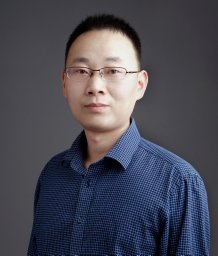
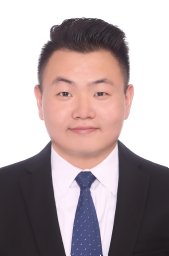
Yang Xu
Google Scholar ID: 4sgCOhwAAAAJ
University of Science and Technology of China
Citations & Impact
Citations
2,335
H-index
26
i10-index
45
Publications
20
Co-authors
13
list available
Publications
Browse publications on Google Scholar (top-right) ↗
Resume (English only)
Academic Achievements
- Jun. 2025: Paper on split federated learning with worker clustering and feature compression accepted by JSAC'25 (CCF A)
- Apr. 2025: Paper on decentralized federated learning with layer stacking accepted by Euro-Par'25 (CCF B)
- Feb. 2025: Paper on federated learning with model splitting and client pairing accepted by ToN'25 (CCF A)
- Jan. 2025: Paper on layer-wise aggregation over non-IID data accepted by TSC'25 (CCF A)
- Oct. 2024: Paper on training slimmable neural networks with federated learning accepted by ToN'24 (CCF A)
- Jun. 2024: Paper on parallel split federated learning accepted by ACM MobiCom 2024 (CCF A)
- May 2024: Paper on asynchronous decentralized federated learning accepted by ToN'24 (CCF A)
- Aug. 2024: Awarded a National Science Foundation of China (NSFC) project
- Dec. 2024: Supervised doctoral student awarded NSFC Doctoral Student Project
Background
- Currently an Associate Professor at the School of Computer Science and Technology, University of Science and Technology of China (USTC)
- Core member of the USTC Intelligent Network and System Group (USTC-INT)
- Research interests include: AIoT, Edge Intelligence, Federated LLMs, and AI Agents
- Focuses on architecting synergistic frameworks that unify edge computing and AI
- Current work pioneers federated LLMs and goal-oriented AI agents for secure, decentralized intelligent systems with human-in-the-loop adaptability
- Leads a multidisciplinary team redefining 'device-edge-cloud' collaborative intelligence
- Emphasizes combining theoretical rigor with hands-on system development to nurture future innovators in edge-AI, adaptive agent ecosystems, and trustworthy federated learning