Scholar
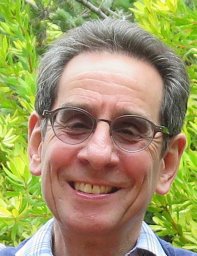
Paul Siegel
Google Scholar ID: 1t-vpJ8AAAAJ
Distinguished Professor of Electrical and Computer Engineering, UC San Diego
Citations & Impact
Citations
2,605
H-index
27
i10-index
65
Publications
20
Co-authors
0
Contact
No contact links provided.
Publications
Browse publications on Google Scholar (top-right) ↗
Resume (English only)
Academic Achievements
- Holds multiple patents in coding and detection for digital recording systems
- Named Master Inventor at IBM Research in 1994
- Co-recipient (with R. Karabed) of the 1992 IEEE Information Theory Society Paper Award for “Matched Spectral Null Codes for Partial Response Channels”
- Shared the 1993 IEEE Communications Society Leonard G. Abraham Prize Paper Award (with B. Marcus and J. K. Wolf) for “Finite-State Modulation Codes for Data Storage”
- Received the 2007 IEEE Communications Society Data Storage Technical Committee Best Paper Award (with students J. B. Soriaga and H. D. Pfister) for “Determining and Approaching Achievable Rates of Binary Intersymbol Interference Channels using Multistage Decoding”
- Delivered the IEEE Information Theory Society Padovani Lecture at the 2015 North American School of Information Theory
- Served on the IEEE Information Theory Society Board of Governors (1991–1996, 2009–2014)
- Editor-in-Chief of IEEE Transactions on Information Theory (2001–2004); also served as Associate Editor and Guest Editor for multiple special issues
Research Experience
- Joined IBM Research staff in 1980
- Managed the Signal Processing and Coding project at IBM Almaden Research Center from 1984 to 1993
- Appointed manager of the Mathematics and Related Computer Science department at IBM Almaden in 1994
- Served as Visiting Associate Professor at UCSD during the 1989–90 academic year
- Joined UCSD faculty in July 1995 and has been there since
Background
- Born in Berkeley, California in 1953
- Primary research interest lies in the mathematical foundations of signal processing and coding, especially as applied to digital data storage and communications
- Currently Distinguished Professor of Electrical and Computer Engineering at University of California, San Diego (UCSD)
- Holds an endowed chair at the Center for Memory and Recording Research (CMRR) and served as its Director from 2000 to 2011
- Affiliated with the California Institute for Telecommunications and Information Technology (Calit2) and the Center for Wireless Communications (CWC)
Co-authors