Scholar
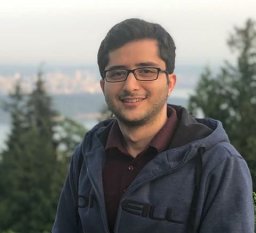
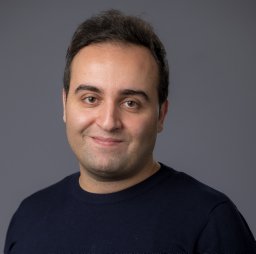
Kaveh Hassani
Google Scholar ID: 1CiEWwsAAAAJ
Research Scientist, Meta Superintelligence Labs
Citations & Impact
Citations
2,661
H-index
13
i10-index
14
Publications
20
Co-authors
77
list available
Contact
Publications
Resume (English only)
Academic Achievements
- Published multiple papers in top-tier conferences and journals including NeurIPS, ICLR, ICML, ICCV, AAAI, KDD, WWW, and TMLR.
- Notable papers include: 'Internalizing Self-Consistency in Language Models: Multi-Agent Consensus Alignment' (Arxiv, 2025)
- 'Generating Long Semantic IDs in Parallel for Recommendation' (KDD, 2025)
- 'Learning Graph Quantized Tokenizers' (ICLR, 2025)
- 'Preference Discerning with LLM-Enhanced Generative Retrieval' (TMLR, 2024)
- 'Unifying Generative and Dense Retrieval for Sequential Recommendation' (TMLR, 2024)
- 'How to Make LLMs Strong Node Classifiers?' (Arxiv, 2024)
- 'Rankitect: Ranking Architecture Search Battling World-class Engineers at Meta Scale' (WWW, 2024)
- 'Staleness-Based Subgraph Sampling for Large-Scale GNNs Training' (Arxiv, 2024)
- 'Evaluating Graph Generative Models with Contrastively Learned Features' (NeurIPS, 2022)
- 'Material Prediction for Design Automation Using Graph Representation Learning' (DAC, 2022)
- 'Cross-Domain Few-Shot Graph Classification' (AAAI, 2022)
Background
- Currently an AI Research Scientist at Meta Superintelligence Labs.
- Research focuses on LLM-as-a-judge, LLM evaluation, self-improving LLMs, and multi-agent reinforcement learning for LLMs.
- Previously worked at Meta’s Ranking and Foundational AI Research group on large-scale graph and sequence learning for recommender systems.
- Served as a Machine Learning Lecturer at the University of Toronto, teaching Fundamentals of Deep Learning.
- Former Principal AI Research Scientist and Research Manager at Autodesk AI Lab.
- Published research in top-tier AI venues including NeurIPS, ICLR, ICML, ICCV, and AAAI.
- Collaborated with institutions such as NASA, Stanford University, Vector Institute, and the University of British Columbia.