Socially Pertinent Robots in Gerontological Healthcare
career value
231K/year
🤖 AI Summary
This study investigates the practical utility and user acceptance of multimodal conversational social robots in geriatric healthcare. Two field experiments were conducted at a Parisian day-care center for older adults, deploying full-size humanoid robots—marking the first systematic validation of usability and acceptance in real-world eldercare settings based on the H2020 SPRING architecture. Methodologically, the system integrates a modular social software framework, robust environmental perception, adaptive behavioral control, and multimodal interaction mechanisms. Acceptance was evaluated via the Acceptance Evaluation Scale (AES) and System Usability Scale (SUS) among adults aged 60+ and caregivers. Results demonstrate high overall acceptance, with significantly enhanced user experience when the robot exhibits robust perception and flexible multimodal interaction. This work provides empirical evidence and a reusable technical framework for deploying social robots in authentic geriatric care environments.
Application Category
📝 Abstract
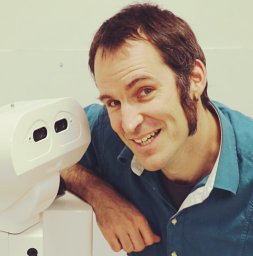
Despite the many recent achievements in developing and deploying social robotics, there are still many underexplored environments and applications for which systematic evaluation of such systems by end-users is necessary. While several robotic platforms have been used in gerontological healthcare, the question of whether or not a social interactive robot with multi-modal conversational capabilities will be useful and accepted in real-life facilities is yet to be answered. This paper is an attempt to partially answer this question, via two waves of experiments with patients and companions in a day-care gerontological facility in Paris with a full-sized humanoid robot endowed with social and conversational interaction capabilities. The software architecture, developed during the H2020 SPRING project, together with the experimental protocol, allowed us to evaluate the acceptability (AES) and usability (SUS) with more than 60 end-users. Overall, the users are receptive to this technology, especially when the robot perception and action skills are robust to environmental clutter and flexible to handle a plethora of different interactions.
Problem
Research questions and friction points this paper is trying to address.
Evaluate social robot's usability in gerontological healthcare
Assess multi-modal conversational robot acceptance
Test robot's interaction robustness in diverse settings
Innovation
Methods, ideas, or system contributions that make the work stand out.
Humanoid robot with social capabilities
Multi-modal conversational interaction system
Evaluation in gerontological healthcare settings
🔎 Similar Papers
No similar papers found.
💼 Related Jobs