A Portable Solution for Simultaneous Human Movement and Mobile EEG Acquisition: Readiness Potentials for Basketball Free-throw Shooting
career value
212K/year
🤖 AI Summary
Understanding the neural correlates of motor preparation during natural, unscripted movement remains challenging due to technical limitations in synchronizing high-temporal-resolution neurophysiological and kinematic data in ecologically valid settings.
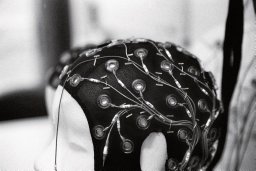
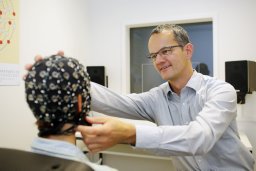
Method: We developed a portable, multimodal acquisition system integrating two synchronized smartphones for markerless 3D pose estimation and a wireless, head-mounted EEG amplifier, with hardware-triggered synchronization ensuring millisecond-level temporal alignment. Using basketball free-throw execution as an ecological paradigm, we recorded EEG and full-body kinematics during unconstrained, real-world performance.
Contribution/Results: We robustly captured the readiness potential (RP) during natural free throws—the first such demonstration in an ecologically valid, unscripted motor task—confirming its presence outside controlled laboratory conditions. While RP amplitude did not predict shot outcome, subject-specific dynamic postural features—including center-of-mass trajectory and joint angular velocity—significantly discriminated successful from unsuccessful attempts. This low-cost, pocket-sized system enables high-fidelity, time-synchronized EEG and 3D kinematic recording during natural movement, establishing a novel paradigm for investigating sport-related neural mechanisms and developing closed-loop neurofeedback training protocols.
Application Category
📝 Abstract
Advances in wireless electroencephalography (EEG) technology promise to record brain-electrical activity in everyday situations. To better understand the relationship between brain activity and natural behavior, it is necessary to monitor human movement patterns. Here, we present a pocketable setup consisting of two smartphones to simultaneously capture human posture and EEG signals. We asked 26 basketball players to shoot 120 free throws each. First, we investigated whether our setup allows us to capture the readiness potential (RP) that precedes voluntary actions. Second, we investigated whether the RP differs between successful and unsuccessful free-throw attempts. The results confirmed the presence of the RP, but the amplitude of the RP was not related to shooting success. However, offline analysis of real-time human pose signals derived from a smartphone camera revealed pose differences between successful and unsuccessful shots for some individuals. We conclude that a highly portable, low-cost and lightweight acquisition setup, consisting of two smartphones and a head-mounted wireless EEG amplifier, is sufficient to monitor complex human movement patterns and associated brain dynamics outside the laboratory.
Problem
Research questions and friction points this paper is trying to address.
Brain-Signal
Motor-Activity
Basketball-Penalty-Shot
Innovation
Methods, ideas, or system contributions that make the work stand out.
Portable Device
Wireless EEG Technology
Posture Analysis
🔎 Similar Papers
No similar papers found.
💼 Related Jobs