Classical and Quantum Algorithms for the Deterministic L-system Inductive Inference Problem
career value
249K/year
🤖 AI Summary
Manual inference of D0L systems in biomorphological modeling is time-consuming and inefficient. Method: We propose the first feature-graph-based automated inference framework, reformulating D0L system identification—from string sequences—into a joint Maximum Independent Set (MIS) and Boolean Satisfiability (SAT) problem on feature graphs, enabling polynomial-time reduction. We introduce a novel feature-graph modeling paradigm and design a dual-track solver: a classical backtracking algorithm ensures exact decidability, while the Quantum Approximate Optimization Algorithm (QAOA) delivers substantial speedup for large-scale instances under polynomial resource constraints. Contribution/Results: Experiments demonstrate that our framework outperforms existing classical heuristic methods in both accuracy and efficiency, offering a scalable, verifiable pathway for automated L-system discovery.
Application Category
📝 Abstract
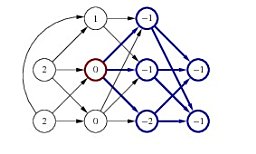
L-systems can be made to model and create simulations of many biological processes, such as plant development. Finding an L-system for a given process is typically solved by hand, by experts, in a massively time-consuming process. It would be significant if this could be done automatically from data, such as from sequences of images. In this paper, we are interested in inferring a particular type of L-system, deterministic context-free L-system (D0L-system) from a sequence of strings. We introduce the characteristic graph of a sequence of strings, which we then utilize to translate our problem (inferring D0L-system) in polynomial time into the maximum independent set problem (MIS) and the SAT problem. After that, we offer a classical exact algorithm and an approximate quantum algorithm for the problem.
Problem
Research questions and friction points this paper is trying to address.
D0L Systems
Automated Image Recognition
Biological Process Modeling
Innovation
Methods, ideas, or system contributions that make the work stand out.
D0L-System Recognition
Quantum Computing Approximation
Feature Mapping
🔎 Similar Papers
No similar papers found.