Engagement and Disclosures in LLM-Powered Cognitive Behavioral Therapy Exercises: A Factorial Design Comparing the Influence of a Robot vs. Chatbot Over Time
career value
192K/year
🤖 AI Summary
This study investigates how embodiment—specifically, social robots (SARs) versus disembodied text-based chatbots—affects user engagement and emotional disclosure dynamics in long-term, large language model (LLM)-driven cognitive behavioral therapy (CBT) interventions. Employing a 2×multi-time-point between-subjects factorial design, we conducted longitudinal analysis of daily interactive CBT exercises and conversational transcripts over several weeks. Results reveal a significant embodiment-by-time interaction: the SAR group exhibited sustained increases in both engagement and emotional intimacy, whereas the chatbot group showed marked declines. These findings demonstrate that embodiment effectively mitigates the well-documented “engagement decay” in digital mental health interventions. The study thus provides critical empirical evidence and a principled design framework for developing sustainable, LLM-powered psychological services.
Application Category
📝 Abstract
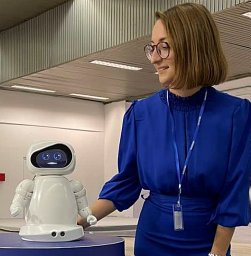
Many researchers are working to address the worldwide mental health crisis by developing therapeutic technologies that increase the accessibility of care, including leveraging large language model (LLM) capabilities in chatbots and socially assistive robots (SARs) used for therapeutic applications. Yet, the effects of these technologies over time remain unexplored. In this study, we use a factorial design to assess the impact of embodiment and time spent engaging in therapeutic exercises on participant disclosures. We assessed transcripts gathered from a two-week study in which 26 university student participants completed daily interactive Cognitive Behavioral Therapy (CBT) exercises in their residences using either an LLM-powered SAR or a disembodied chatbot. We evaluated the levels of active engagement and high intimacy of their disclosures (opinions, judgments, and emotions) during each session and over time. Our findings show significant interactions between time and embodiment for both outcome measures: participant engagement and intimacy increased over time in the physical robot condition, while both measures decreased in the chatbot condition.
Problem
Research questions and friction points this paper is trying to address.
Compare robot vs chatbot impact on therapy engagement over time
Assess embodiment effect on participant disclosures in CBT exercises
Evaluate intimacy and engagement changes in LLM-powered therapy tools
Innovation
Methods, ideas, or system contributions that make the work stand out.
LLM-powered SAR for CBT exercises
Factorial design assessing embodiment impact
Evaluated engagement and intimacy over time
🔎 Similar Papers
2024-09-03arXiv.orgCitations: 10
💼 Related Jobs