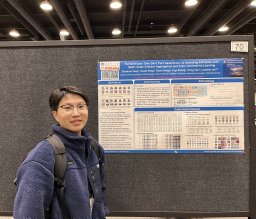
Posterior Distribution-assisted Evolutionary Dynamic Optimization as an Online Calibrator for Complex Social Simulations
career value
203K/year
🤖 AI Summary
This work proposes a novel approach that integrates Bayesian posterior modeling with Evolutionary Dynamic Optimization (EDO) to address the challenge of continuously calibrating parameters in complex social system simulators to align with real-time observational data. By learning the posterior distribution of parameters conditioned on observed data and incorporating both pre-training and online fine-tuning mechanisms, the method introduces posterior information into the EDO framework for the first time, substantially enhancing the algorithm’s awareness of and adaptability to dynamic environments. Experimental results on economic and financial simulators demonstrate that the proposed approach significantly improves optimization performance and stability in representative dynamic calibration tasks, thereby extending the applicability boundaries of conventional EDO methods.
Application Category
📝 Abstract
The calibration of simulators for complex social systems aims to identify the optimal parameter that drives the output of the simulator best matching the target data observed from the system. As many social systems may change internally over time, calibration naturally becomes an online task, requiring parameters to be updated continuously to maintain the simulator's fidelity. In this work, the online setting is first formulated as a dynamic optimization problem (DOP), requiring the search for a sequence of optimal parameters that fit the simulator to real system changes. However, in contrast to traditional DOP formulations, online calibration explicitly incorporates the observational data as the driver of environmental dynamics. Due to this fundamental difference, existing Evolutionary Dynamic Optimization (EDO) methods, despite being extensively studied for black-box DOPs, are ill-equipped to handle such a scenario. As a result, online calibration problems constitute a new set of challenging DOPs. Here, we propose to explicitly learn the posterior distributions of the parameters and the observational data, thereby facilitating both change detection and environmental adaptation of existing EDOs for this scenario. We thus present a pretrained posterior model for implementation, and fine-tune it during the optimization. Extensive tests on both economic and financial simulators verify that the posterior distribution strongly promotes EDOs in such DOPs widely existed in social science.
Problem
Research questions and friction points this paper is trying to address.
online calibration
dynamic optimization
social simulation
parameter adaptation
evolutionary optimization
Innovation
Methods, ideas, or system contributions that make the work stand out.
Posterior Distribution
Evolutionary Dynamic Optimization
Online Calibration
Dynamic Optimization Problem
Social Simulation
🔎 Similar Papers
2024-10-06Proceedings of the 2025 Conference of the Nations of the Americas Chapter of the Association for Computational Linguistics: Human Language Technologies (System Demonstrations)Citations: 13
2024-03-08International Conference on Web and Social MediaCitations: 7
💼 Related Jobs