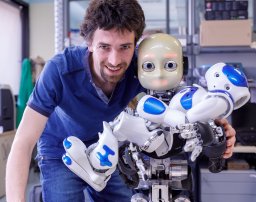
The body is not there to compute: Comment on "Informational embodiment: Computational role of information structure in codes and robots" by Pitti et al
career value
182K/year
🤖 AI Summary
This paper challenges the dominant paradigm that conceives the body—biological or robotic—as a computational substrate, arguing that the primary function of animal and robotic bodies is not information processing or computation, but rather enabling embodied interaction and adaptive behavior under physical constraints.
Method: Through conceptual analysis, philosophical argumentation, and systematic critique of embodied cognition theory and information theory, the study rigorously establishes the “body-as-non-computational” thesis.
Contribution/Results: It provides the first systematic articulation and defense of this thesis, clarifying the fundamental ontological distinction between computational processes and embodied existence. The work exposes the theoretical misplacement inherent in generalizing computational frameworks to bodily ontology, thereby challenging the entrenched computational metaphor. Its findings yield non-computational design principles for robotics and interpretive frameworks for neuroscience, advancing embodied intelligence research from a “computation-centric” toward a “physical-reality-prioritized” paradigm.
Application Category
📝 Abstract
Applying the lens of computation and information has been instrumental in driving the technological progress of our civilization as well as in empowering our understanding of the world around us. The digital computer was and for many still is the leading metaphor for how our mind operates. Information theory (IT) has also been important in our understanding of how nervous systems encode and process information. The target article deploys information and computation to bodies: to understand why they have evolved in particular ways (animal bodies) and to design optimal bodies (robots). In this commentary, I argue that the main role of bodies is not to compute.
Problem
Research questions and friction points this paper is trying to address.
Challenges computational role of bodies in biology and robotics
Questions if bodies primarily function for information processing
Critiques applying computation metaphor to animal and robot bodies
Innovation
Methods, ideas, or system contributions that make the work stand out.
Critique computational role of bodies
Question information theory in embodiment
Argue bodies not primarily for computing
🔎 Similar Papers
2024-07-09IEEE/ASME transactions on mechatronicsCitations: 94
💼 Related Jobs